Single Plane Illumination Microscopy analysis of the origins and behavior of a unique zebrafish neuron
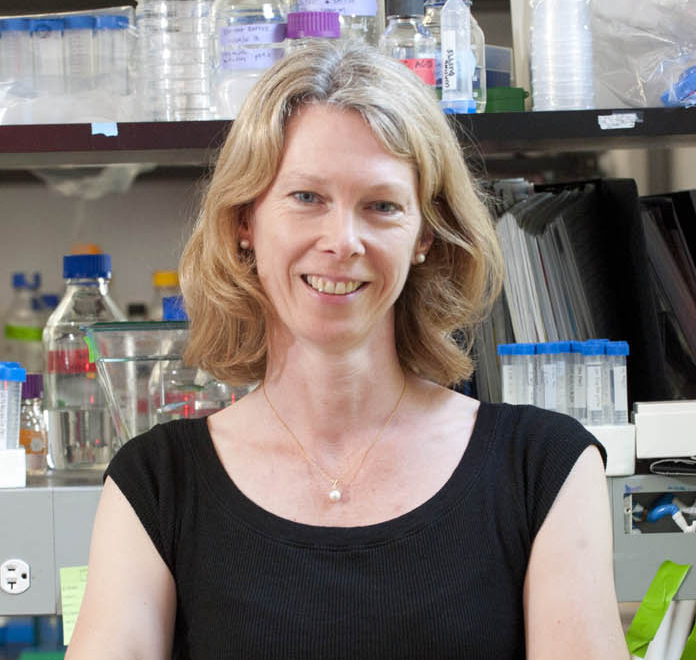
Victoria Prince
Professor, Dept. of Organismal Biology & Anatomy, Dean for Graduate Affairs, Biological Sciences Division
Vicky received her Bsc. in Biochemistry from Imperial College, London and did her graduate work at the National Institute for Medical Research in Mill Hill, London, receiving her Ph.D. from University College in 1991. She completed her postdoctoral training at Guy’s Hospital, London with Andrew Lumsden and at Princeton University with Robert Ho, before establishing her independent research lab at The University of Chicago in 1997. She is currently Professor of Organismal Biology & Anatomy, and has been the Biological Sciences Division Dean for Graduate Affairs since 2010. Over the course of her career she and her lab team have investigated axial regionalization of vertebrate embryos, making important contributions to our understanding of Hox genes, hindbrain patterning, consequences of gene and genome duplications, regionalization of the endoderm, and development of pancreatic cell types.
The Human Services Big Picture Project
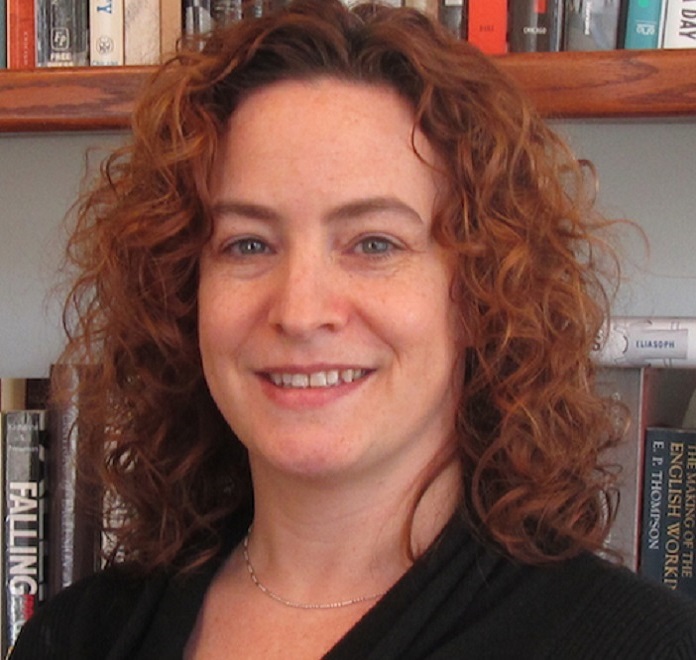
Nicole Marwell
Associate Professor, School of Social Service Administration
Nicole P. Marwell is Associate Professor in the University of Chicago School of Social Service Administration. Her research examines urban governance, with a focus on the diverse intersections between nonprofit organizations, government bureaucracies, and politics. Marwell’s approach to studying urban governance draws on an interdisciplinary set of insights and tools from sociology, organization studies, ethnic studies, political science, and public administration. Her work examines the complex and shifting sets of inter-organizational relations underlying urban processes such as public goods distribution, community formation, and democratic representation. Marwell uses qualitative, quantitative, and historical methods to explore how changes in this meso-level of social structure affect urban cohesion, inequality, and exclusion. Her research has been published by the University of Chicago Press, the American Sociological Review, Social Service Review, the Journal of Public Administration Research and Theory, Urban Studies, City & Community, and other outlets, and supported by the National Science Foundation, the Helmsley Foundation, and the Council of Family and Child Caring Agencies.
Simulation of Biomolecular Systems: Overcoming the Multiscale Challenge
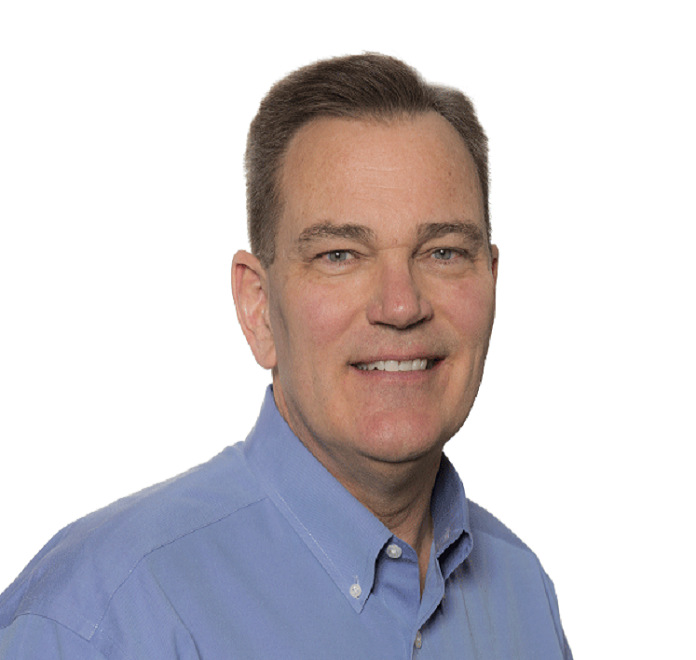
Gregory A. Voth
Distinguished Service Professor, Department of Chemistry, James Franck Institute, and Institute for Biophysical Dynamics
Gregory A. Voth is the Haig P. Papazian Distinguished Service Professor of Chemistry at The University of Chicago. He is also a Professor of the James Franck Institute and the Institute for Biophysical Dynamics, as well as a Senior Fellow of the Computation Institute. He received a Ph.D. in Theoretical Chemistry from the California Institute of Technology in 1987 and was an IBM Postdoctoral Fellow at the University of California, Berkeley from 1987-89. He is the author or co-author of approximately 500 peer-reviewed scientific articles. Voth is a Fellow of the American Chemical Society, American Physical Society, The Biophysical Society, and the American Association for the Advancement of Science. He has received a number of awards and other forms of recognition for his work, including most recently the American Chemical Society Division of Physical Chemistry Award in Theoretical Chemistry and Election to the International Academy of Quantum Molecular Science. He has mentored more than 175 postdoctoral fellows and graduate students.
Looking for Dark Matter with XENON-1T
Luca Grandi
Assistant Professor, Kavli Institute for Cosmological Physics, Enrico Fermi Institute, UChicago Physics Department
Luca has always been fascinated by fundamental physics, the kind of physics that is able to change our way of looking at the surrounding world and can provide a deeper understanding of how nature works. His activities until now, have been focused on the development of two-phase noble liquids Time Projection Chamber (TPC) technology for Dark Matter direct detection. During his Ph.D., he was involved in the design, construction and operation of the SArP-2.3kg prototype, the first argon detector to have set a limit on the Weakly Interacting Massive Particles (WIMPs) interaction rate. From 2008-2015, Luca worked on the DarkSide combines argon two-phase and liquid scintillator technology. In 2015, he joined the XENON-1T project. The experiment features a 3500kg liquid xenon detector surrounded by a large water tank to suppress the background. The XENON-1T experiment, thanks to its design, large fiducial mass, and increased sensitivity to WIMPs, will probe properties of dark matter in yet unexplored regions and will “open” a second phase of dark matter searches with multi-ton noble liquid detectors. Luca received his Ph.D. In 2005 from Universita degli Studi di Pavia, Italia.
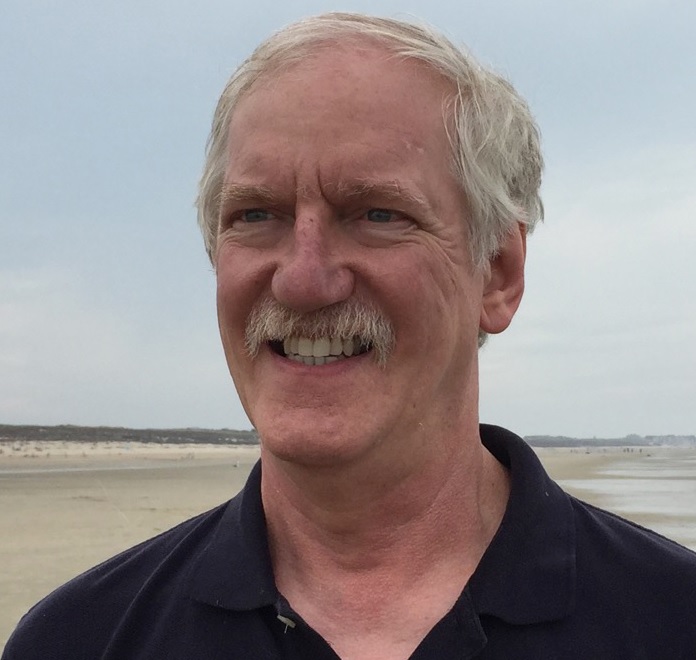
Spatial Analytics in the Cloud with GeoDa Web
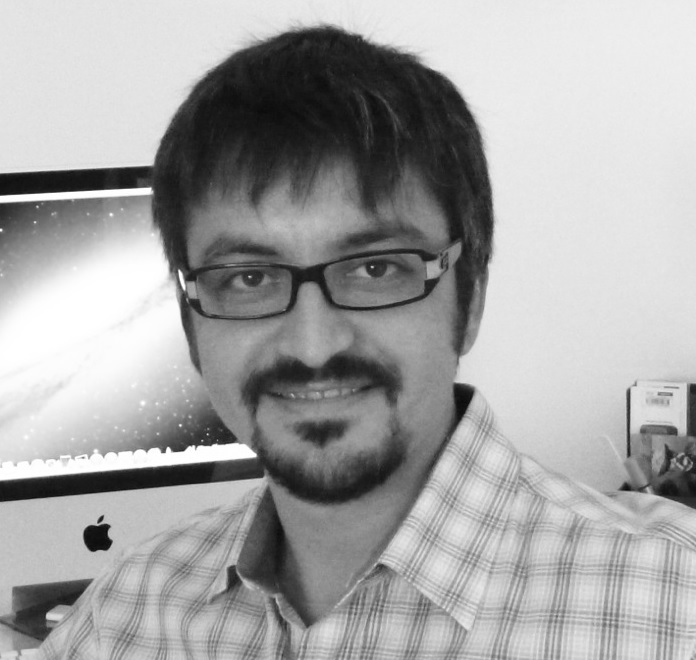
Luc Anselin
Stein-Freiler Distinguished Service Professor of Sociology and the College, Director, Center for Spatial Data Science, Senior Fellow, NORC
Luc Anselin is the Stein-Freiler Distinguished Service Professor of Sociology and the College, the Director of the new Center for Spatial Data Science and a Senior Fellow at NORC. Anselin is the developer of the SpaceStat and GeoDa software packages for spatial data analysis. He was elected Fellow of the Regional Science Association International in 2004 and was awarded their Walter Isard Prize in 2005 and William Alonso Memorial Prize in 2006. He was elected to the National Academy of Sciences in 2008 and the American Academy of Arts and Sciences in 2011. Anselin comes to the University of Chicago from Arizona State University where he was a Regents' Professor and held the Walter Isard Chair. He was the founding Director of the School of Geographical Sciences and Urban Planning. He also started and directed the GeoDa Center for Geospatial Analysis and Computation. Before ASU, he was a Professor at the University of Illinois, Urbana-Champaign, where he directed the Spatial Analysis Laboratory in the Department of Geography and was a Senior Research Scientist at the National Center of Supercomputing Applications (NCSA). He has held (joint) appointments in a range of disciplines, including Geography, Urban and Regional Planning, Economics, Agricultural and Consumer Economics, Political Economy and Political Science.